
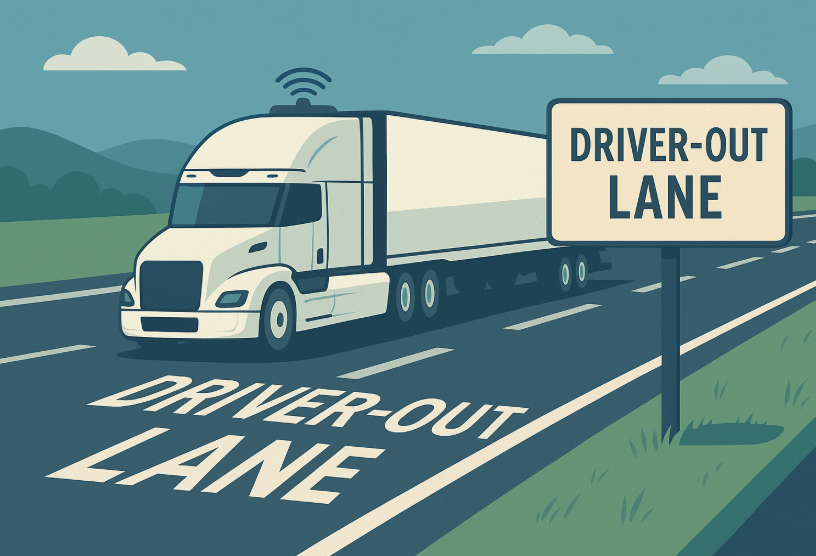
The advent of driver-out lanes, where autonomous trucks run without a human on board, is one of the accelerating factors in the transformation of the freight sector, changing the way it thinks about the long-haul business. With Bot Auto’s Houston-San Antonio pilot leading the charge, autonomous trucks are not just a concept anymore — they have already revolutionized the industry.
This pilot gives profound learnings for the fleets and logistics companies which are preparing for driver-out freight movement. From infrastructure readiness to safety protocols, the technology that proves this point is pivotal to progress. Companies like Leadgamp, which are in a ceaseless drive for efficiency and safety, have already included this kind in their route planning and operations.
This article will focus on key insights of the Houston–San Antonio pilot, ways in which autonomous cargo transport is changing the road, and recommendations for your operation to stay ahead of the reinvention.
What are Driver-Out Lanes and Why Are They of Importance?
Driver-out lanes are special highway corridors devoted solely to driverless trucks, which can operate autonomously without a safety driver on board. Unlike regular autonomy testing, this is a lane for unattended operations for the first time — a whole new standard for logistics.
Bot Auto, one of the pioneers in the sector of autonomous trucking, has just finished a pilot program from Houston-San Antonio, takeaways covering a distance of over 200 miles with commercial goods totally driverless. This pilot is a template for what’s next in logistics and freight networks.
The significance is:
- Enhanced productivity: The trucks never stop for driver breaks and therefore do not need to adhere to hours-of-service compliance or schedule shifts.
- Safety: The continuous operation of the machine can lead to less human errors.
- Cost savings: Labor costs go down while asset utilization increases.
- Technology readiness: The pilot operation actualized performance at real scale.
Leadgamp, which is present in Texas and the Southwest, sees the message clear: either prepare now or avoid the trouble later.

The Important Lessons from the Bot Auto Houston–San Antonio Pilot
1. Autonomous Systems Have Become Extremely Reliable
The success of Bot Auto was not a blunder — it came due to a whole range of safety analysis, route learning, and running continuous simulation. Their vehicle managed, without any disengagements, to execute multiple journeys along I-10 between Houston and San Antonio, which was a real driver-out performance transportation.
This makes it clear that the technology of autonomous trucking is at the level of reliability where it can operate repeatedly on high-volume routes. Companies involved in trucking recruiting, like Leadgamp, need to identify similar routes within their network to consider integrating them strategically.
2. Infrastructure Collaborations Are Necessary
Bot Auto had a close collaboration with the Texas DOT and local infrastructure teams to implement:
- Dedicated pull-off zones
- Remote monitoring and teleoperation systems
- V2X signaling
These developments were not just beyond technical issues they also included political and logistical cooperation. The bottom line is that implementing driver-out lanes requires the engagement efficiency of a number of stakeholders, especially along dense traffic routes like Houston – San Antonio.
3. Not All Freight Is Created Equal
Bot Auto’s experiment was oriented on predictable, long-haul types of freight — albeit pallets with the same pickup and dropoff locations. This indicates that driver-out autonomy’s perfect usage could be for freight coming through a linehaul route rather than a complex urban delivery.
Leadgamp, a company that operates both regional and long-distance freight, plans to follow suit: mapping high-speed, low-configuration lanes with enough demand for repeated runs.
4. Remote Operations Will Play a Major Role
Bot Auto is not merely a driverless vehicle but a connected one. Their autonomous fleet consists of remotely overseen vehicles if required, remote operators take control for example, closing lanes, construction, or unexpected stops.
This “tele-guided autonomy” provides a mix of solutions that trucking firms can copy. The tech Launchpad is already probing the remote op protocols as part of its own driver-out readiness roadmap.
How to Prepare Your Operation for Driver-Out Lanes
It’s time for your fleet to take a step ahead of the curve in freight transportation moves into new areas:
1. Conduct a Lane Audit
Initiate your lane audit with the highest volume. Do they seem to be ready for autonomous trucks? Following criteria should be made clear first:
- Dominant highways (versus city driving)
- Stable weather conditions
- Clear signage/maintained shoulders
- Low complexity of pick-up/drop-off
In particular, Leadgamp has already identified Houston–Dallas and Phoenix–El Paso driver-out just-in-time lanes based on the same patterns as the Bot Auto Houston–San Antonio pilot.
2. Integrate with AV Technology Providers
Vendor partnerships have become essential to autonomous driving that is not negotiable. A partnership with tech providers should ensure that:
- Lane data is shared
- Pilot routes tested with drivers are completed safely
- Teleoperation and emergency handoffs are installed before the infrastructure is built
Companies like Bot Auto and others provide APIs and SDKs for standalone logistic software. This way, collaboration becomes more accessible.
3. Upgrade Fleet Telemetry and Connectivity
Your truck is only as good as your connection. Without a driver, make the following investments:
- Redundant LTE/5G systems
- Real-time vehicle health diagnostics
- Two-way communication with AV systems
Leadgamp has set up multi-sensor data modules along the fleet’s long haul highway to pave the way for driver-out retrofits in the future.
4. Train Your Workforce
Your autonomous lanes may not need drivers, but you’ll require different roles:
- Remote safety operators
- AV technicians
- Route optimization analysts
Upskilling starts now. Leadgamp’s internal academy has already launched AV readiness courses to prepare the staff for autonomy’s new logistics model.
Safety Should Be the Core — Not Just Optional
The core insight from the Bot Auto Houston–San Antonio pilot is that safety is all that matters. The vehicle included:
- Redundant brakes and steering systems
- 360-degree LiDAR and radar KPIs
- Artificial Intelligence/Machine Learning for predictive motion plans
These are not just integrated features, they are baseline requirements by the public and regulatory bodies for driver-out lanes to be accepted. Freight carriers need to make sure that any AV partner provides this level of openness and performance.
Leadgamp’s AV purchasement overview comprises more than 50 safety verification points, which cover everything from disengagement rates to thermal management systems.

Autonomous Trucking: Envisioning the Future
The route ahead is bright: Autonomous freight transport is speeding up, and driver-out lanes being at the vanguard. Bot Auto’s breakthrough in Texas will likely stimulate other similar initiatives in Arizona, Georgia, and California, especially in high-density freight corridors.
On the flip side, the benefits are clearly evident:
- Labor shortages are still pressuring traditional carriers
- Efficient fuel usage through optimized AV routing
- Avoiding urban congestion with long-haul corridors
- The freight networks become more predictable and scalable
The key takeaway: Those who are slow to act risk becoming obsolete in a restructured logistics chain.
Leadgamp’s Perspective
At Leadgamp, we are firm in the belief that driver-out lanes are not a threat, but a chance. We are building pilot partnerships, getting our teams knowledgeable, and restructuring our logistics model around autonomous trucking, wherever it is reasonable.
The Bot Auto Houston–San Antonio pilot was beyond a simple concept validation, it was an urgent call to arms. Leadgamp, being one of the respected fleets in that region, will keep on the adaptation path, test things, and take the lead in freight transportation evolution.
The trucks of tomorrow have already started to move goods where there are no humans. The only question left is: Is your operation ready?
FAQ: Driver-Out Lanes and Autonomous Freight
What are driver-out lanes in trucking?
They are highway routes where autonomous trucks operate without human drivers. These lanes are optimized for long-haul, consistent freight using fully driverless technology.
How did the Bot Auto Houston–San Antonio pilot work?
The company completed real-world, unmanned freight trips between Houston and San Antonio. The trucks ran without disengagements and proved that autonomy can be safe and scalable under certain conditions.
Is driver-out trucking already legal?
It depends on the state. Texas is one of the few states actively allowing and collaborating on autonomous freight pilots, while others are still building regulatory frameworks.
How can logistics companies prepare for driver-out lanes?
Fleets should audit their routes, upgrade vehicle telemetry, partner with AV tech vendors, and train staff for new remote support roles. Leadgamp has already begun implementing these steps.
Will autonomous trucking replace drivers?
Not entirely. While long-haul lanes will be automated first, complex deliveries and urban routes still require drivers. Instead of eliminating jobs, autonomy shifts labor toward remote operation, maintenance, and system support.
What infrastructure changes are needed for driver-out trucking?
Improvements may include designated rest zones, AV-compatible signage, real-time monitoring systems, and V2X communication. Bot Auto worked with Texas DOT to ensure safe integration along I-10.
Why is safety so important for driver-out lanes?
Without a driver, every system must operate redundantly and flawlessly. Safety systems like LiDAR, radar, AI motion planning, and remote override are necessary to gain public and regulatory trust.